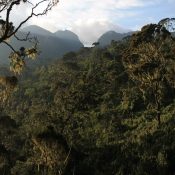
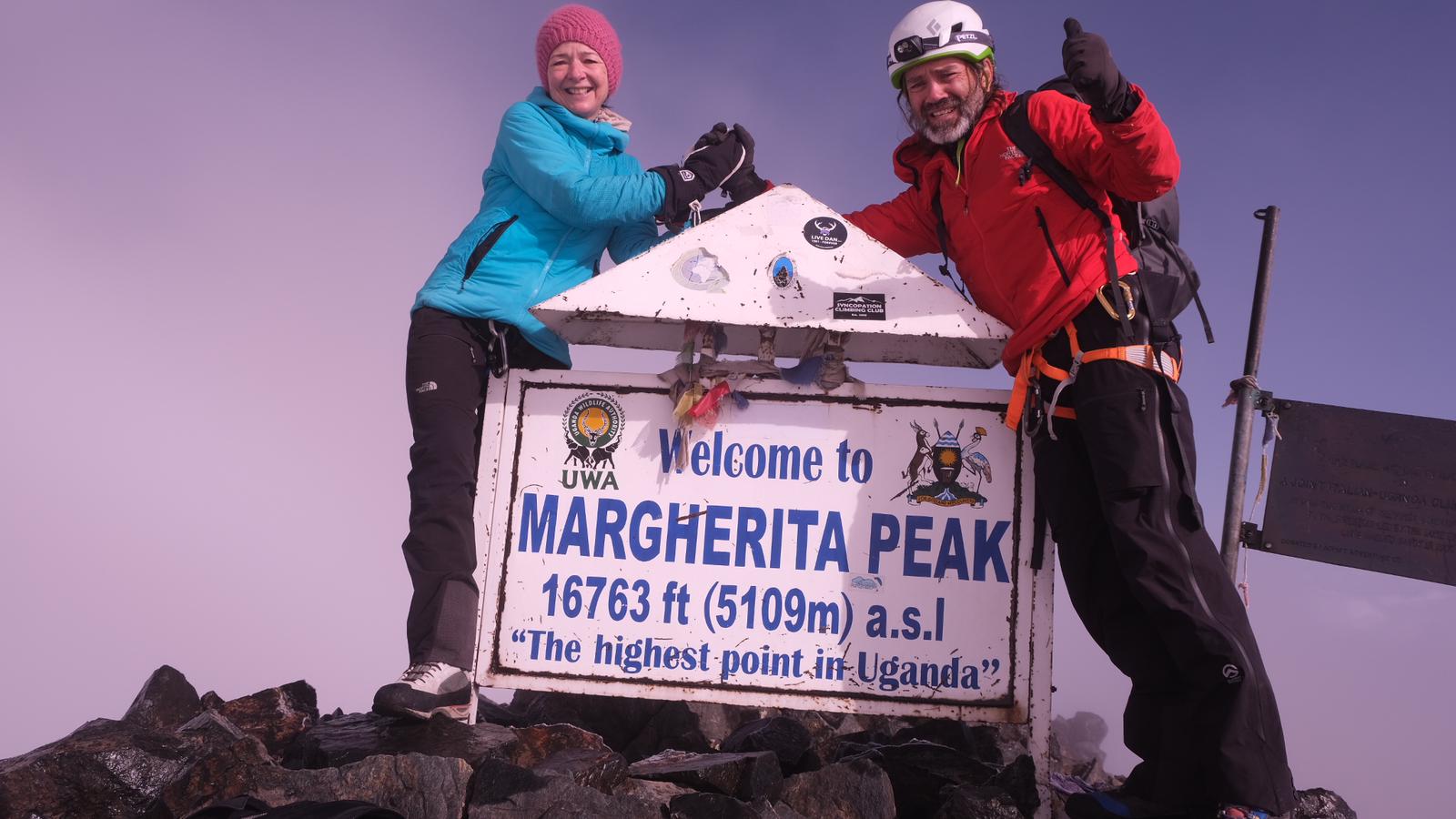
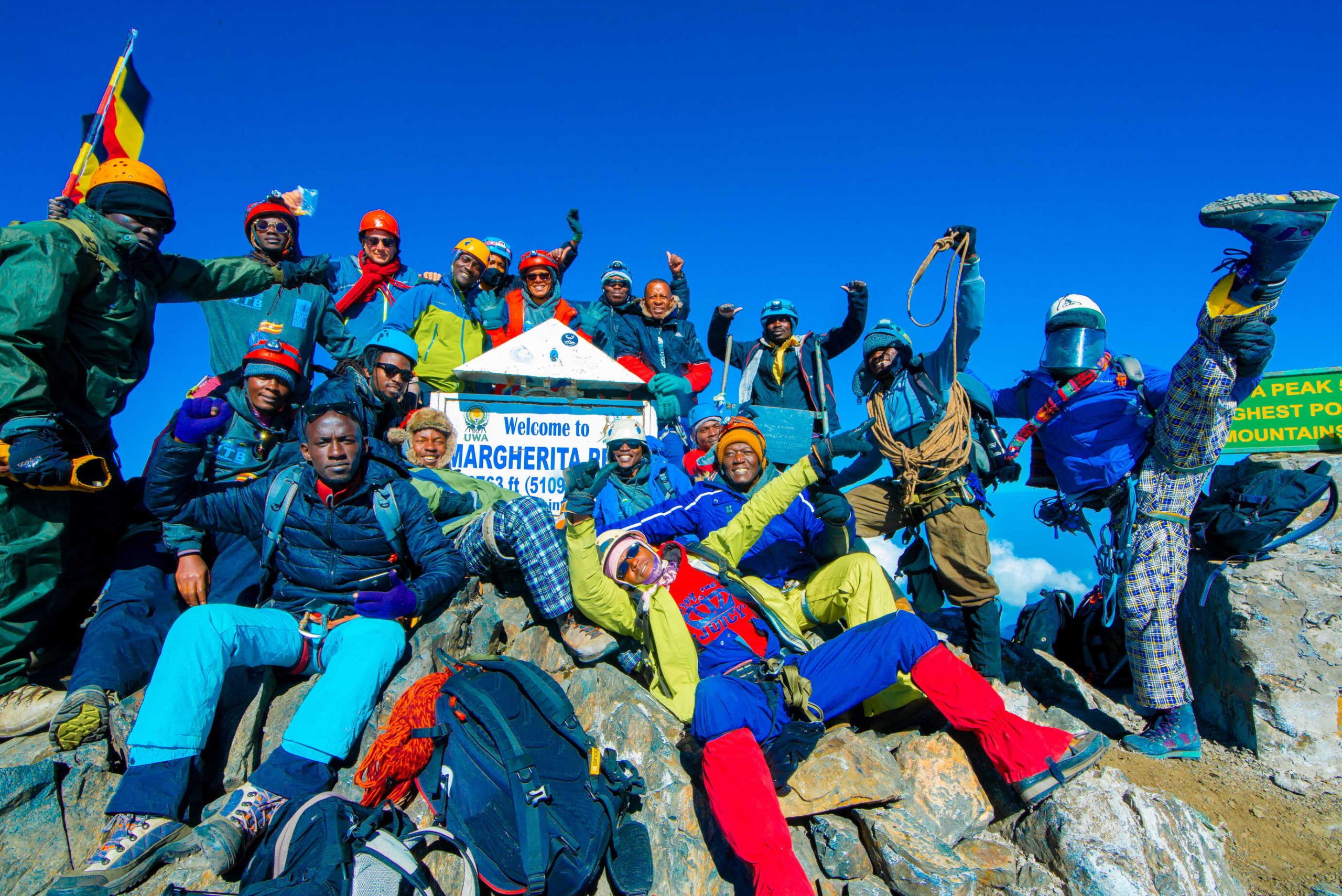
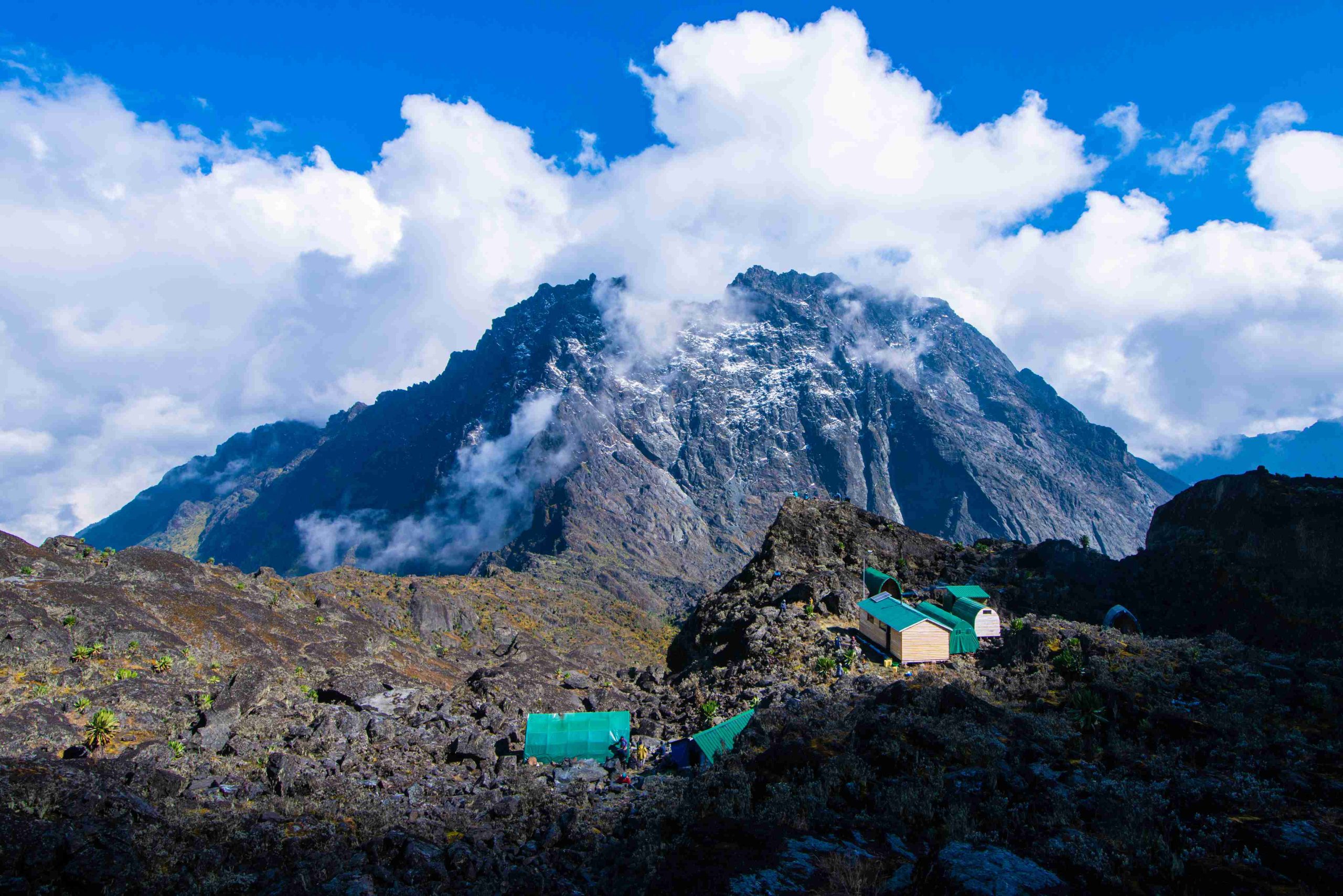
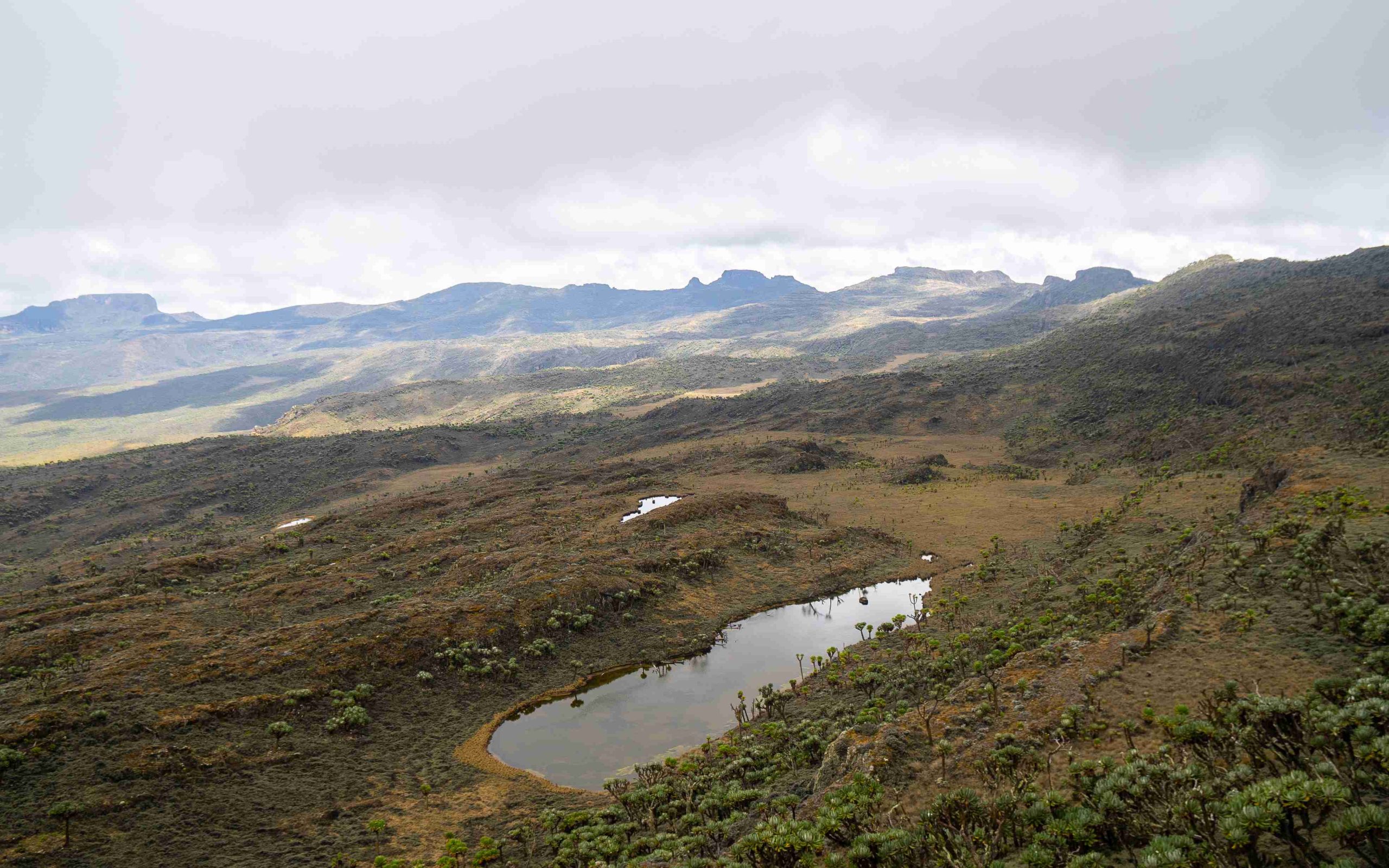
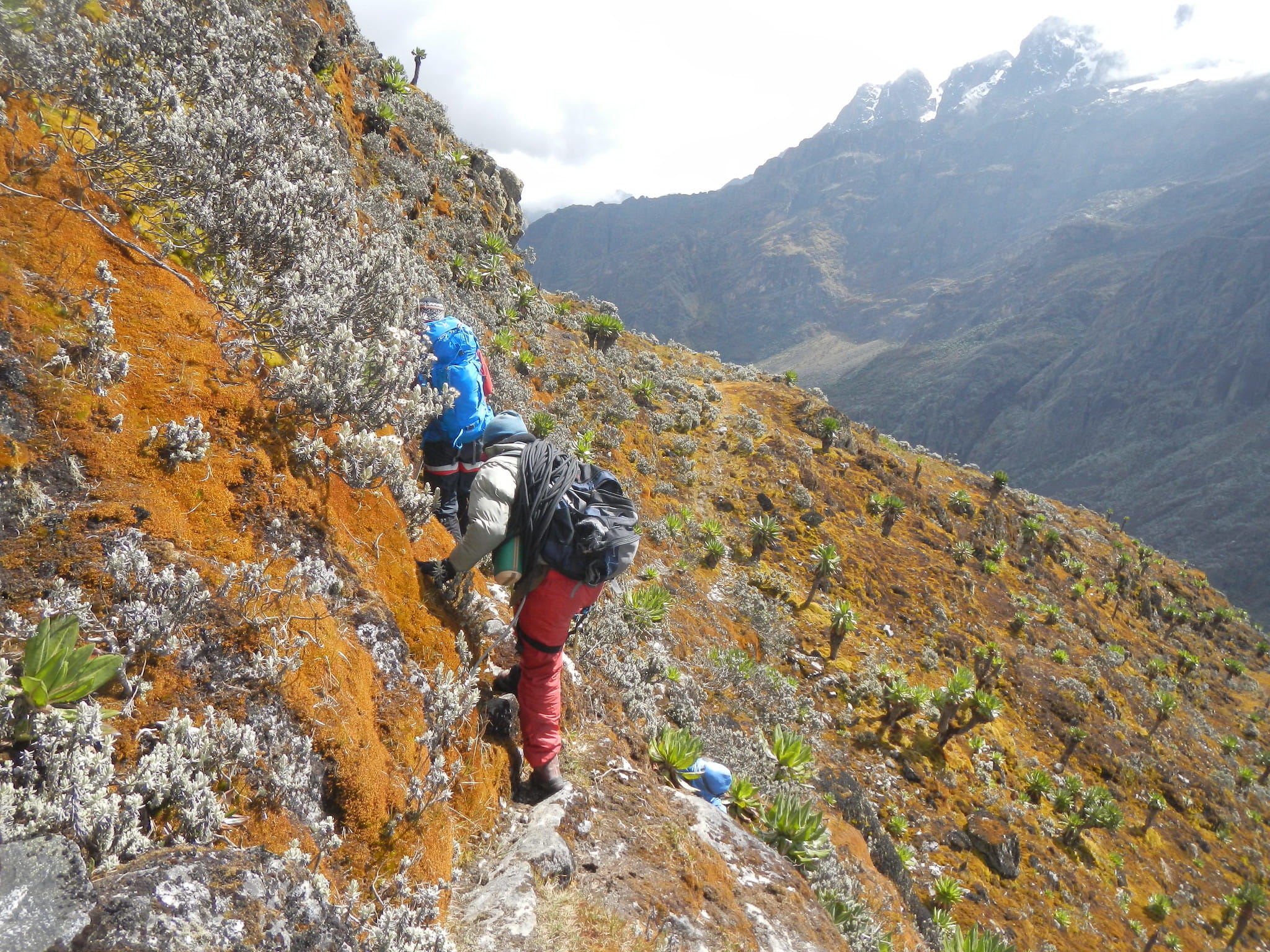
Scaling the Mountains of the Moon is like traveling from the Equator to the Arctic in just a few days. As you ascend from the foothills toward Margherita Peak (5,109m), the landscape undergoes a dramatic metamorphosis. The vegetation isn’t just a backdrop; it is a living museum of rare, prehistoric-looking flora.
1. The Montane Forest (1,800m – 2,500m)
The journey begins in the lush, emerald embrace of the Montane forest. The canopy here is broken and wild, home to moderate-sized trees like the Yellow Wood and the Red Stinkwood.
- What to look for: Keep an eye out for the vibrant Symphonia with its waxy red flowers, wild bananas, and delicate begonias that thrive in the cool, misty shadows.
2. The Bamboo Zone (2,500m – 3,000m)
At 2,500 meters, the forest gives way to towering “grass.” This zone is a labyrinth of bamboo, where the ground is carpeted in a thick litter of golden leaves.
- The Rare Bloom: The Rwenzori bamboo is famous for its synchronized flowering, an event that occurs only once every 30 years.
- Flora Highlights: In the swampier clearings, you’ll encounter your first Giant Lobelias, alongside the iconic Rwenzori blackberry and crimson mountain flowers.
3. The Heather Zone (3,000m – 4,000m)
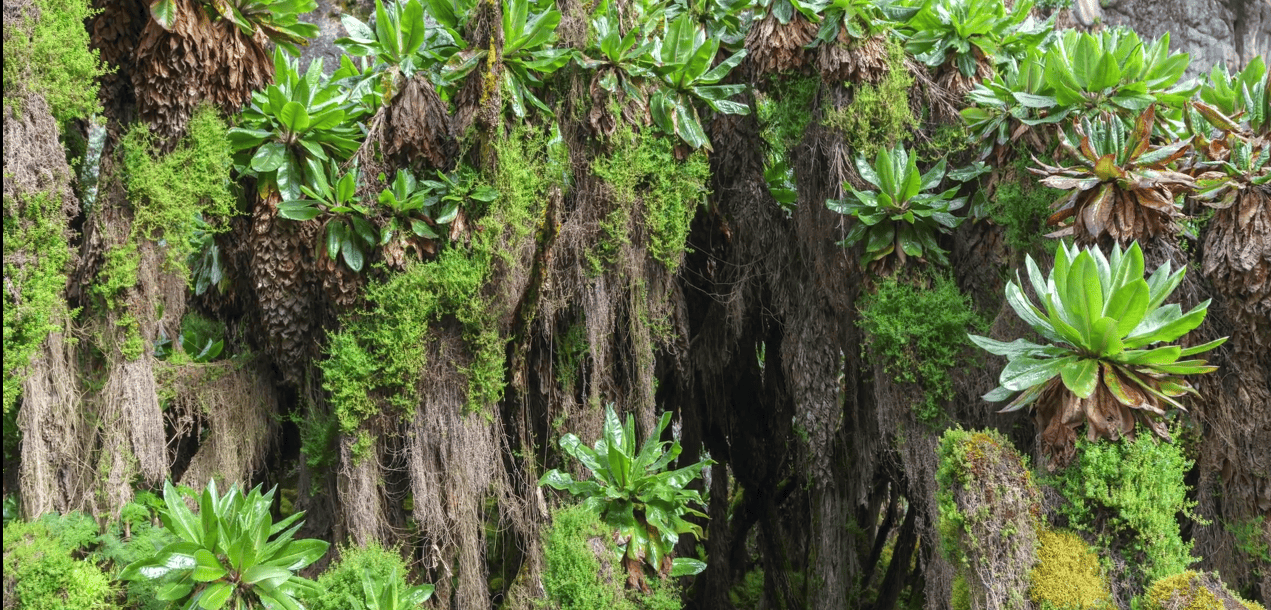
This is the “Old Man’s Beard” forest. It feels like a scene from a fantasy novel—tree stems are draped in thick Sphagnum moss, and branches hang heavy with Usnea lichens.
- The Landscape: Valleys are dominated by massive bogs of Carex tussocks.
- The Blooms: Look for the Coral Pink Ground Orchid and the deep mauve balsams that add splashes of color to the misty grey-green woodland.
4. The Afro-Alpine Zone (4,000m – 4,500m)
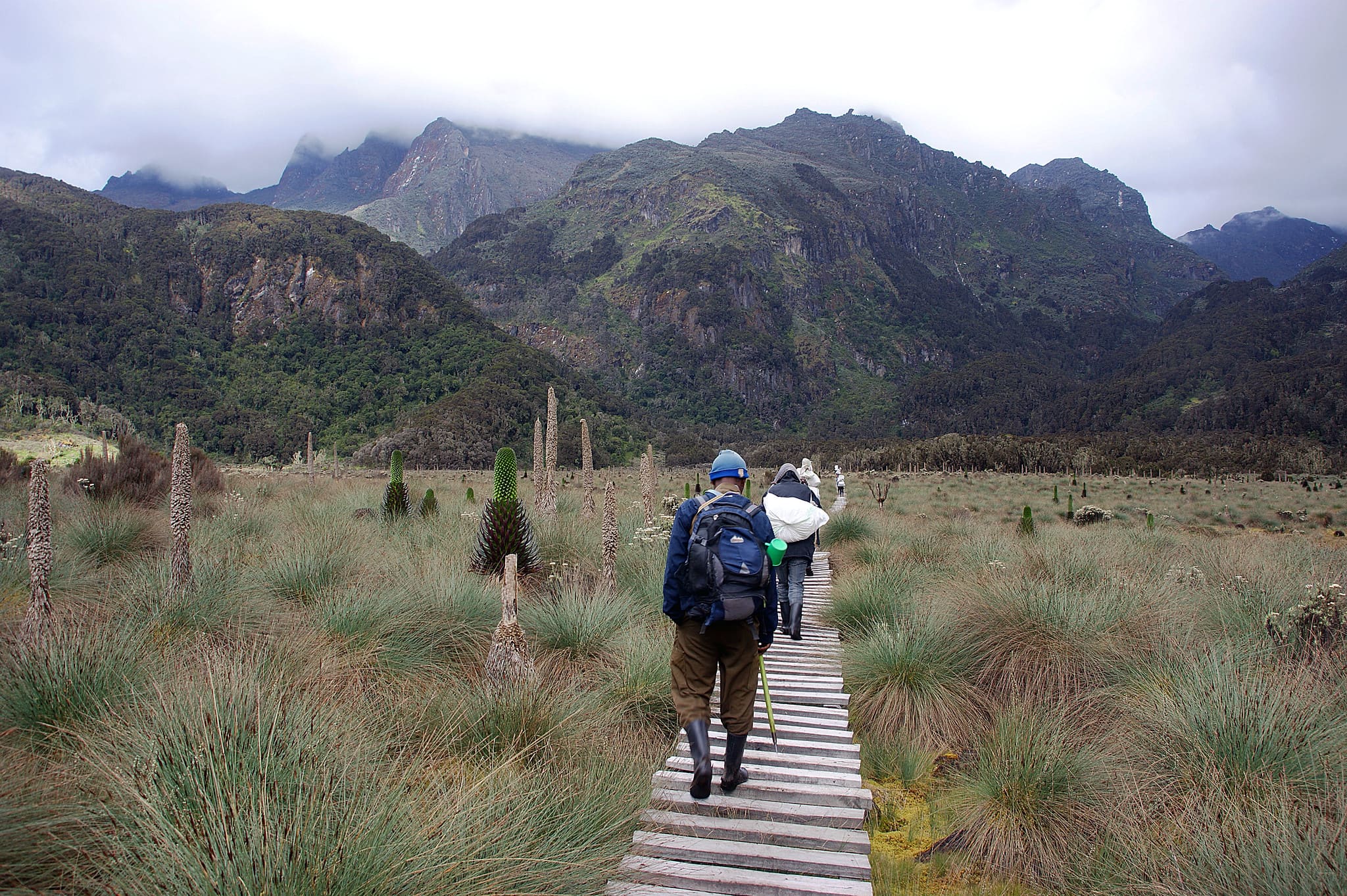
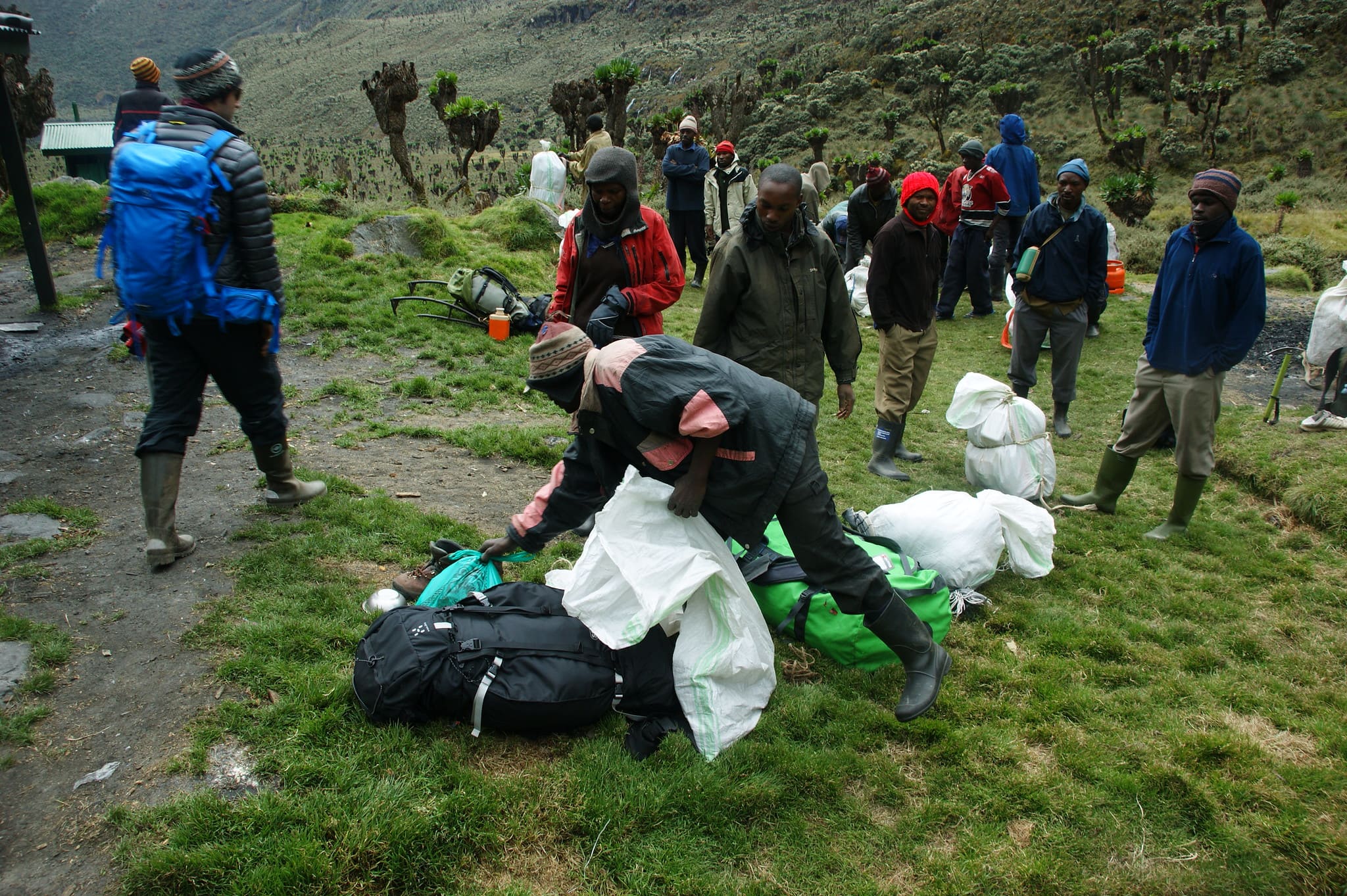
As you cross the 4,000-meter threshold, you enter the realm of the “Giants.” This is a high-altitude swamp where prehistoric flora dominates.
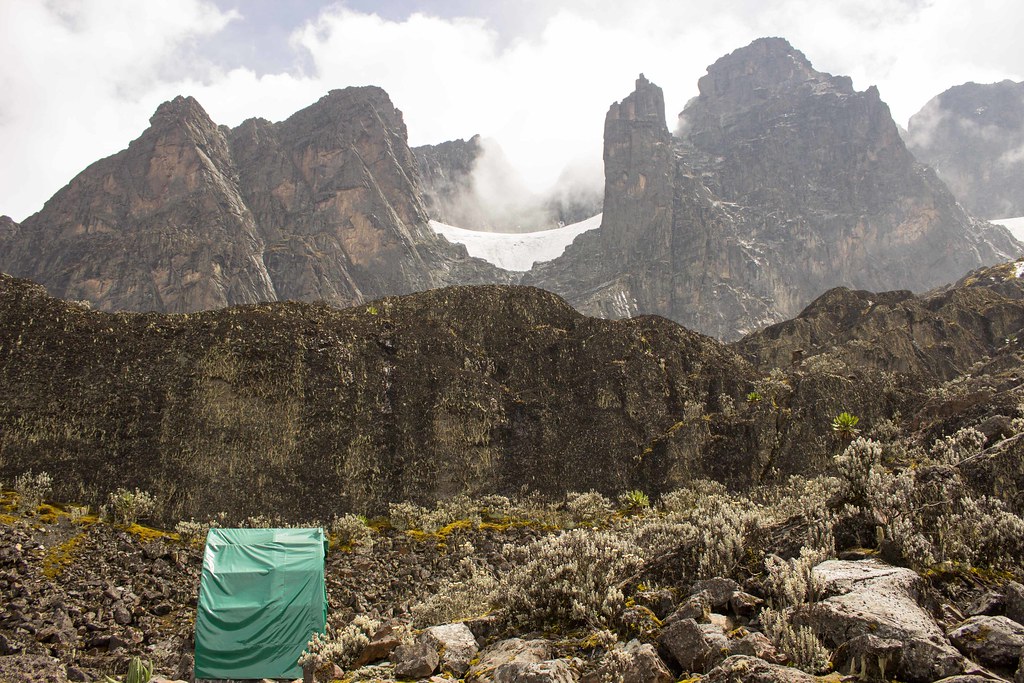
- The Giants: This zone is famous for the Giant Groundsel and the Torch Lobelia, which can grow several meters tall.
- High-Altitude Resilience: As the air thins, trees disappear. In their place, you’ll find short grasses, mosses, and Everlasting Flowers covered in white woolly hairs to protect them from the nocturnal frost.
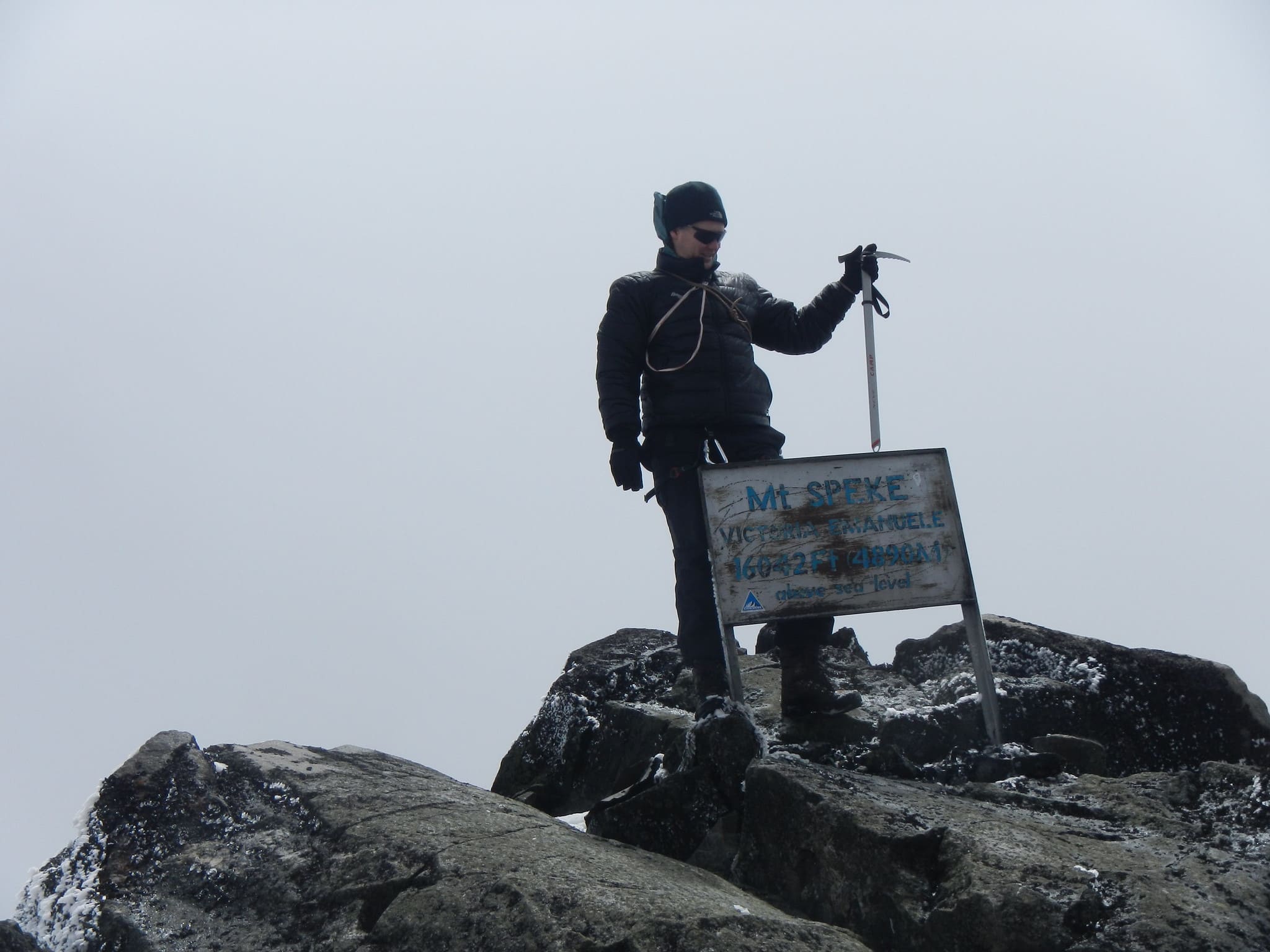
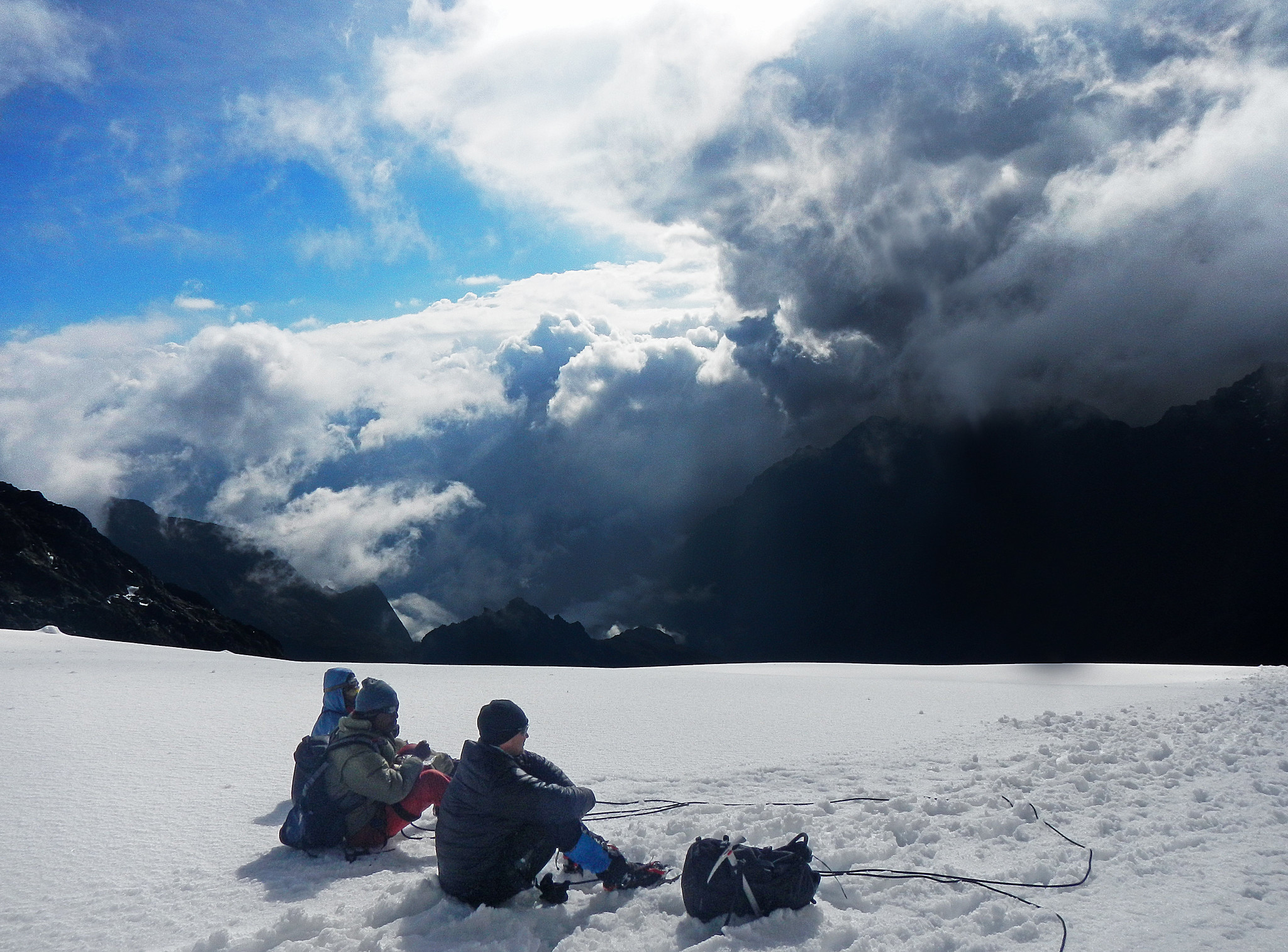
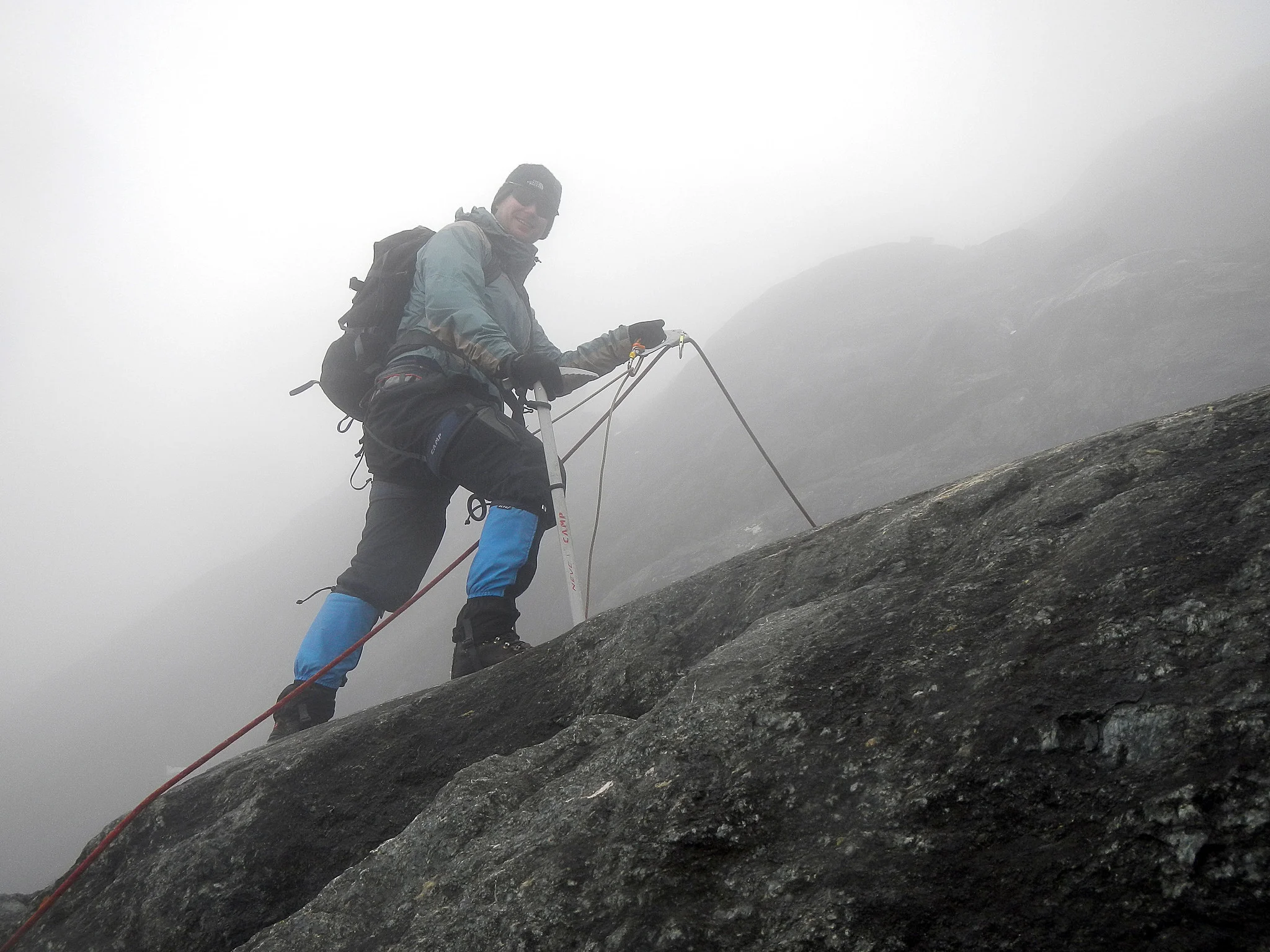
5. The Rock and Glacier (4,500m – 5,109m)
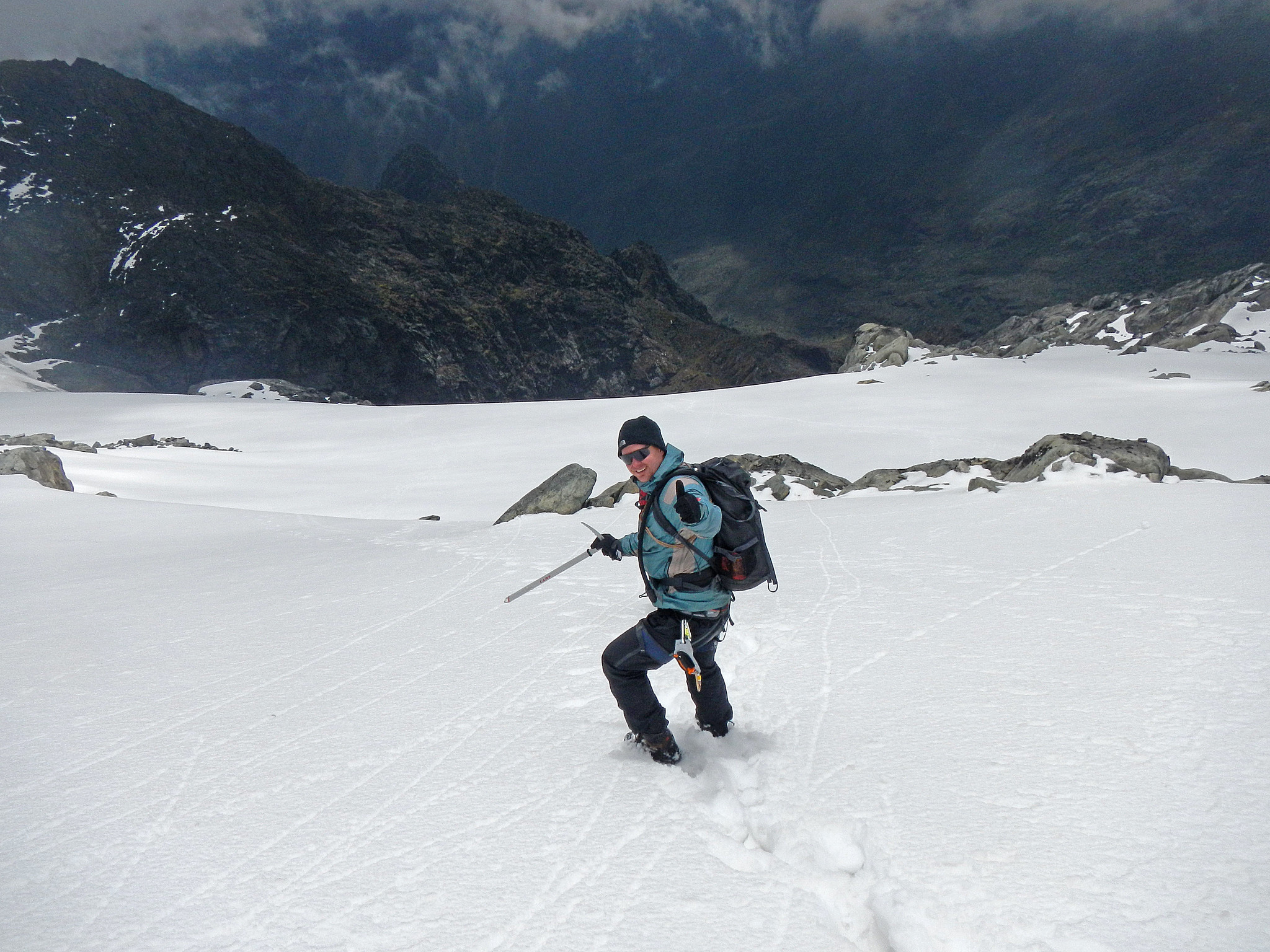
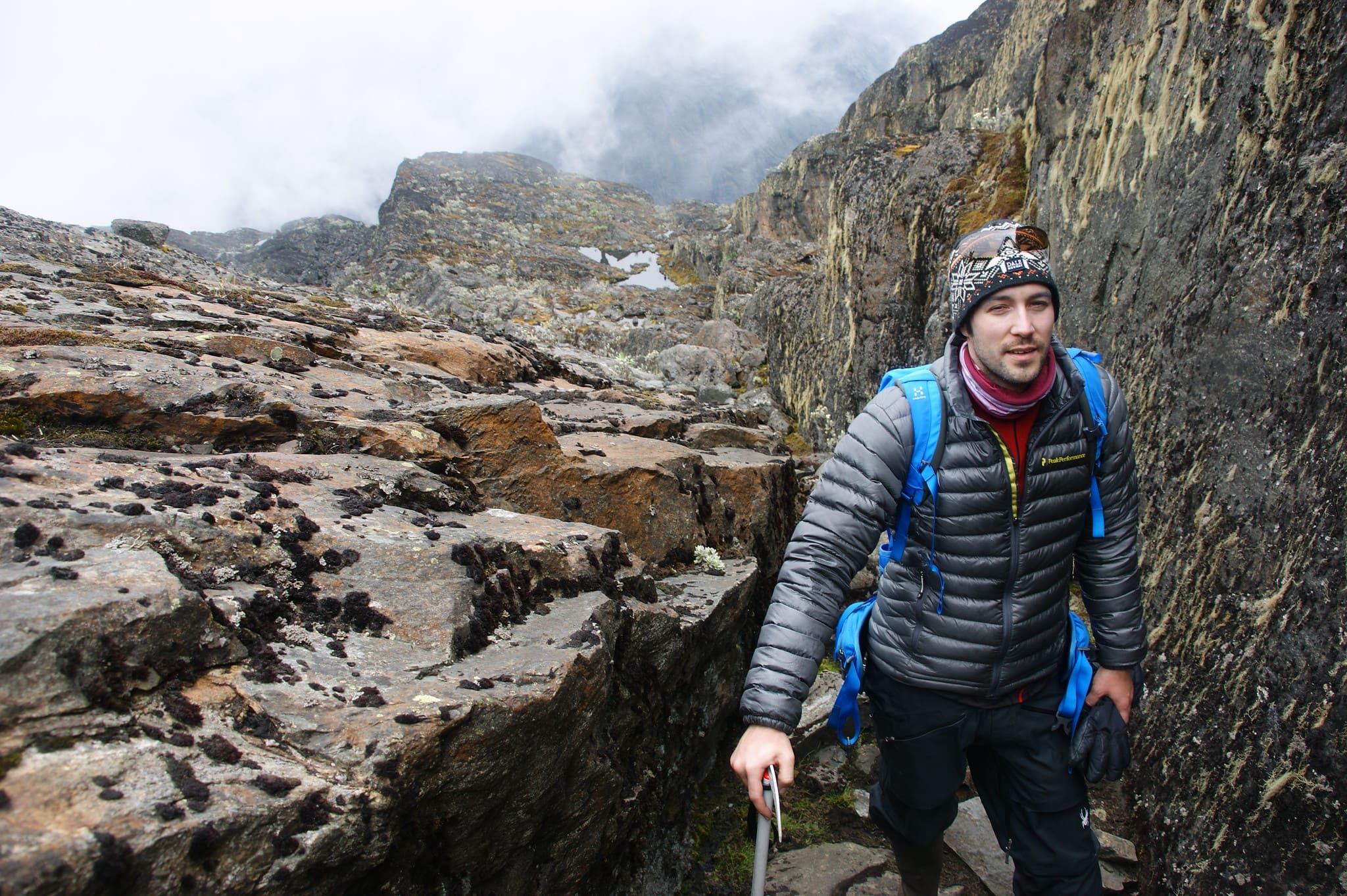
Beyond 4,500 meters, life almost stands still. This is a world of bare rock and ancient ice.
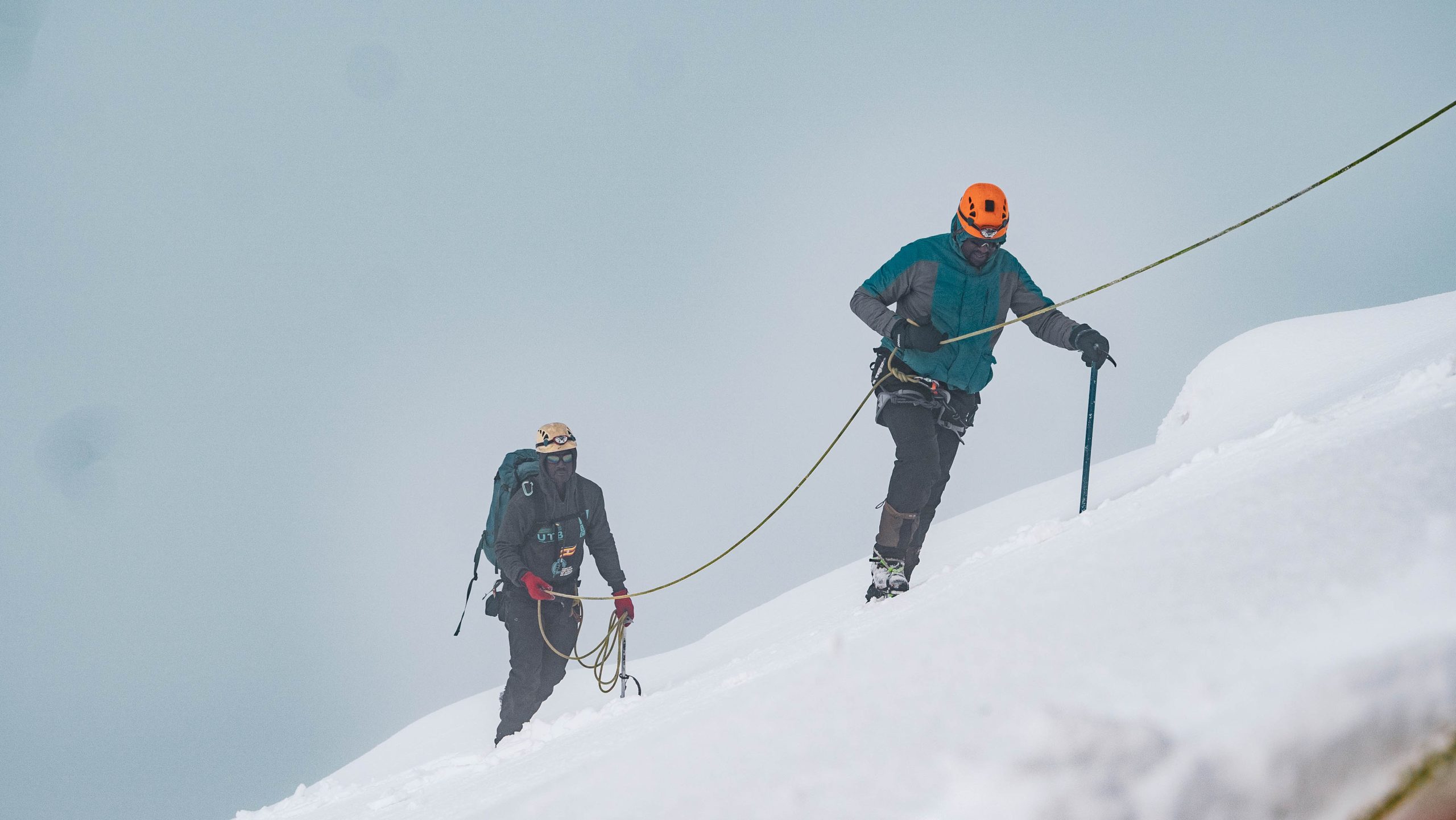
- Seasonal Shifts: During the dry season, the jagged peaks of Mount Stanley stand as exposed metamorphic rock. In the rainy season, these summits are transformed into a glistening, ice-covered fortress—a true equatorial glacier.
Plan Your Rwenzori Adventure
Ready to see it for yourself? Browse our Rwenzori expeditions and trekking trails, or share your travel dates on the safari planning form and our local experts will build the itinerary around you.
Related Guides