
Bwindi Impenetrable National Park
Hidden in the misty highlands of southwestern Uganda lies one of Africa’s most remarkable wilderness areas — Bwindi Impenetrable Forest National Park. This ancient rainforest, draped across steep ridges and deep valleys along the edge of the Albertine Rift, feels almost untouched by time. Dense vegetation, tangled vines, towering hardwood trees, and thick undergrowth make the forest truly “impenetrable,” giving visitors the sense of stepping into a living natural sanctuary where wildlife and nature thrive in extraordinary abundance.
Bwindi is globally celebrated for its incredible biodiversity. The forest is home to more than 120 species of mammals, including several primates that move gracefully through the forest canopy. Forest elephants quietly roam its depths, while small antelopes and other elusive animals inhabit the thick vegetation. Above the forest floor, the air fills with the songs and calls of birds—over 360 species have been recorded here—while more than 200 species of butterflies flutter among the trees and flowers. Botanists have identified over 320 species of trees in this ancient afromontane forest, and some of them grow nowhere else in Uganda. Walking through Bwindi is therefore not simply a visit to a national park; it is an immersion into one of the richest ecosystems in East Africa.
Gorilla Trekking – Bwindi’s Greatest Experience
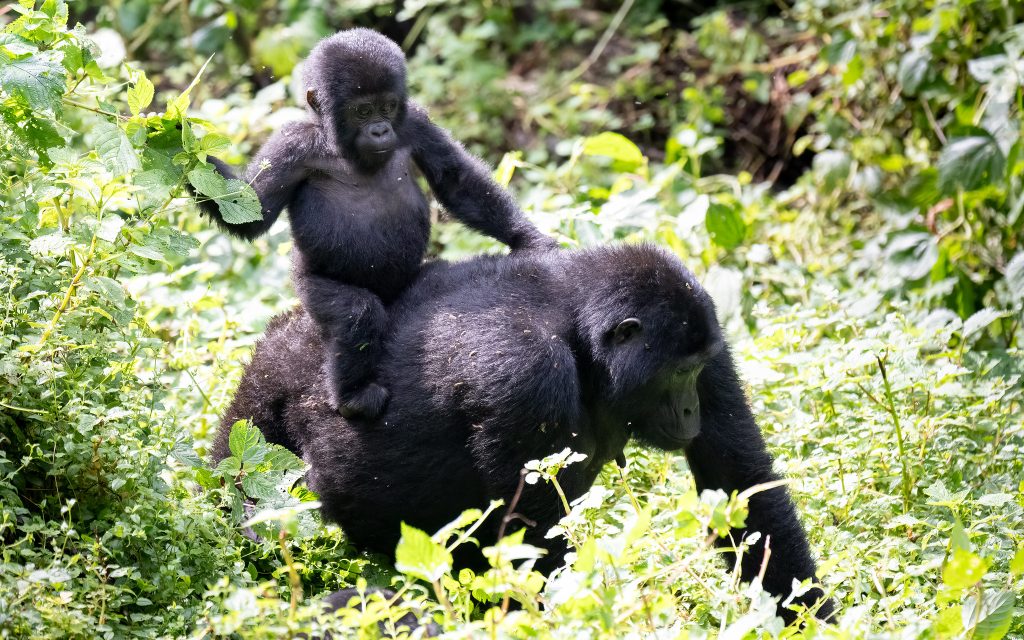
The true highlight of Bwindi is the unforgettable encounter with the endangered mountain gorillas. These gentle giants live deep within the forest, and trekking to find them is one of the most moving wildlife experiences on the planet. Gorilla tourism in Bwindi began in April 1993 when the first gorilla family was successfully habituated to human presence. Since then, carefully managed trekking programs have allowed visitors to observe these magnificent primates in their natural environment while ensuring their protection.
Today several habituated gorilla families can be visited by travelers who hold trekking permits issued by the Uganda Wildlife Authority. Only a small number of permits are issued each day, ensuring that the gorillas are protected from excessive disturbance and that each visitor enjoys an intimate and respectful experience.
A typical gorilla trek begins early in the morning with a briefing from experienced rangers and guides. From there, visitors follow forest trails that wind through thick vegetation, crossing streams and climbing forested slopes as trackers locate the gorilla family. The trek can take a few hours or most of the day depending on the gorillas’ movements, but the moment you finally meet them makes every step worthwhile. Watching a silverback calmly guard his family while young gorillas play in the foliage is a powerful reminder of our shared connection with nature.
Because trekking can be physically demanding, visitors are encouraged to come prepared with good hiking shoes, rain gear, and a reasonable level of fitness. Conservation guidelines—often referred to as the “Gorilla Rules”—help ensure that both visitors and gorillas remain safe during this once-in-a-lifetime encounter.
A Paradise for Bird Lovers
Beyond gorillas, Bwindi is also a dream destination for bird enthusiasts. The forest shelters hundreds of bird species, including many Albertine Rift endemics that are rarely seen anywhere else in the world. Colorful and elusive species such as the Short-tailed Warbler, Bar-tailed Trogon, Kivu Ground Thrush, and Dusky Crimsonwing inhabit these forests.
Experienced birders visiting areas like Ruhija and Buhoma can identify dozens of species in a single day. Early morning walks with knowledgeable guides provide the best opportunity to observe the forest’s birdlife as the dawn chorus echoes through the valleys.
Discovering the Forest on Nature Walks
For travelers who wish to explore beyond gorilla trekking, Bwindi offers a network of scenic hiking trails that reveal the forest’s hidden beauty. Guided nature walks allow visitors to discover the park’s unique plants, birds, primates, and insects while learning about the delicate ecological balance that sustains this ancient ecosystem.
One of the most popular short walks is the Munyanga River Trail, which follows the edge of the forest to a series of beautiful waterfalls surrounded by ferns, orchids, and butterflies. The Rushurra Trail rewards hikers with sweeping views across the Rift Valley and, on clear days, distant glimpses of Lake Edward and the snow-capped Rwenzori Mountains.
The Muzabajiro Trail climbs to a scenic viewpoint overlooking the forest canopy and the distant Virunga volcanoes, while the longer Ruizi River Trail offers a full day of exploration through some of the park’s most pristine bird habitats.
Visitors traveling with four-wheel-drive vehicles can also traverse the park through Ruhija, passing through dramatic landscapes of deep forest and open clearings. Along the way, watch for duikers, primates, and a variety of forest and grassland birds. Ruhija is also the starting point for hikes to the famous Mubwindi Swamp and the bamboo zone, one of the park’s most unique vegetation areas.
Culture and Community
Life around Bwindi is closely connected to the forest. In the evenings, visitors often have the opportunity to enjoy vibrant cultural performances by local women’s groups and community associations. Through traditional songs, dance, and storytelling, they share the heritage of the communities that have lived alongside the forest for generations. Proceeds from these performances help support families and community projects around the park, making tourism an important tool for conservation and local development.
Accommodation in Bwindi
Bwindi offers a range of accommodation options that cater to different travel styles, from comfortable mid-range lodges to exclusive luxury tented camps. Community-run guesthouses and simple bandas provide clean and welcoming accommodation for travelers seeking a more authentic experience, while nearby towns also offer additional hotel options.
Getting to Bwindi
Most journeys to Bwindi begin in Kampala. The drive to the highland town of Kabale takes about six to seven hours along paved roads. From there, travelers continue on scenic murram roads through rolling hills and rural landscapes toward the park headquarters at Buhoma. Depending on the route, the final stretch may require a four-wheel-drive vehicle, especially during the rainy season.
Though the journey is long, it is part of the adventure—gradually transitioning from bustling cities to tranquil countryside before finally reaching the mist-covered forests where gorillas roam.
